Mold guide
Signs You Need Professional Mold Remediation
A practical checklist for signs of mold in a house, recurring moisture, visible spots, leak history, and when professional mold remediation makes sense.
The signs you need professional mold remediation are usually connected to moisture. Visible spots matter, but they are not the only clue. A musty odor that returns after cleaning, swollen baseboards, bubbling paint, soft drywall, cabinet damage, staining after a leak, or rooms that stay humid can all point to a problem that deserves inspection. In Orlando, those signs often appear after AC issues, roof leaks, plumbing leaks, storm-driven rain, appliance failures, or long periods of indoor humidity.
Not every small stain is a major mold project. Some issues can be corrected with source repair, drying, and careful cleaning. Professional remediation becomes more important when porous materials are affected, the source is hidden, the condition returns, the area is spreading, or the property owner needs documentation for a rental, sale, insurance conversation, or commercial space. The goal is not to make every situation feel alarming. The goal is to know when surface cleaning is no longer a sensible plan.
Use this checklist to decide when to call for mold inspection or mold remediation in Orlando. It covers the signs homeowners notice first, the signs property managers should document, and the situations where opening walls or spraying chemicals can make the problem harder to solve.
Musty odor that keeps coming back
A musty odor is one of the most common reasons Orlando homeowners request mold inspection. Odor does not automatically prove a large remediation scope, but it does mean something deserves attention when the smell keeps returning. Pay close attention to closets, bathrooms, laundry rooms, sink cabinets, rooms on exterior walls, guest rooms that stay closed, and areas near previous leaks. Odor that is strongest when the AC turns on, after rain, or after the house has been closed for several hours can be especially useful information. The source may be damp drywall, cabinet material, carpet pad, stored contents, an HVAC humidity issue, or a hidden leak. Professional review helps identify whether the odor is connected to active moisture, old damage, or a material that needs removal or cleaning.
Visible spots, staining, or unusual texture
Visible growth, dark spots, powdery texture, fuzzy material, repeated staining, or discoloration along baseboards and ceilings should be documented before anyone starts cleaning. Some stains are mineral marks, soot, dirt, or old water marks. Others are connected to active moisture and microbial growth. The difference is not always obvious from a phone photo, but the pattern matters. Spots along a bathroom ceiling may suggest ventilation and humidity. Spots under a sink may point to plumbing. Staining around a window may suggest wind-driven rain or condensation. Ceiling discoloration below an attic or upstairs bathroom may point to a leak above. If the spots are on drywall, wood trim, cabinet boxes, insulation, or carpet pad, a professional remediation review becomes more important because porous materials can hold contamination below the surface.
Swollen baseboards, soft drywall, or bubbling paint
Material damage is often a stronger signal than color alone. Swollen baseboards, soft drywall, bubbling paint, peeling texture, warped laminate, buckled flooring, sagging ceiling areas, or cabinet bottoms that feel weak can indicate water moved into the material. Once porous building materials absorb water, the visible face may not tell the full story. In Orlando, this is common around appliance lines, bathroom vanities, laundry rooms, roof leak paths, patio doors, and exterior walls after heavy rain. If the material is soft, crumbling, or separating, surface cleaning is not enough. The affected material may need moisture evaluation, selective removal, cleaning of surrounding surfaces, and source correction. Professional remediation is most useful when the problem has moved into the material instead of sitting only on the surface.
A leak history that was never fully checked
Many mold remediation calls start with an old leak that seemed resolved. A dishwasher overflow, roof drip, toilet supply line, AC drain clog, water heater leak, or refrigerator line can be cleaned up quickly on the surface while moisture remains behind cabinets, trim, flooring, or walls. Weeks later, the homeowner notices odor, staining, or soft material. If a leak was cleaned with towels and fans but no one checked moisture, the property owner may not know whether the structure dried. This matters in rental homes and condos because a tenant or neighboring unit may report water after the most important drying window has already passed. A professional inspection can review the leak path and decide whether mold remediation is necessary or whether the area is dry and only needs cosmetic repair.
Spots that return after cleaning
When spots keep returning, the source probably has not been corrected. Repeated cleaning may remove what is visible for a short time, but it does not solve moisture behind the surface, poor ventilation, condensation, or a recurring leak. This is especially common in bathrooms, around windows, under sinks, and inside closets that share exterior walls. In Orlando, high humidity can make this cycle worse because surfaces stay damp longer and closed spaces do not dry well. If the same area needs to be cleaned again and again, stop treating it as a cosmetic issue. Document the timeline, check for moisture sources, and request a mold inspection. Professional remediation may be needed if the growth is on porous material, if the area is spreading, or if the source has affected hidden material.
Humidity problems or AC issues inside the home
Central Florida homes depend on air conditioning for moisture control, not just temperature. If the house feels cool but sticky, windows fog, vents sweat, closets smell musty, or rooms stay humid with doors closed, the indoor environment may support mold problems. AC drain clogs, poor ventilation, oversized systems, short cycling, dirty coils, and long vacant periods can all contribute to elevated humidity. A mold remediation contractor is not a substitute for HVAC repair, but the mold concern and humidity source should be evaluated together. If growth appears around vents, on ceilings, in closets, or on contents, the property owner should look beyond surface cleaning. The plan may require HVAC review, humidity correction, cleaning, and in some cases remediation of affected building materials.
Cabinet, bathroom, and laundry room warning signs
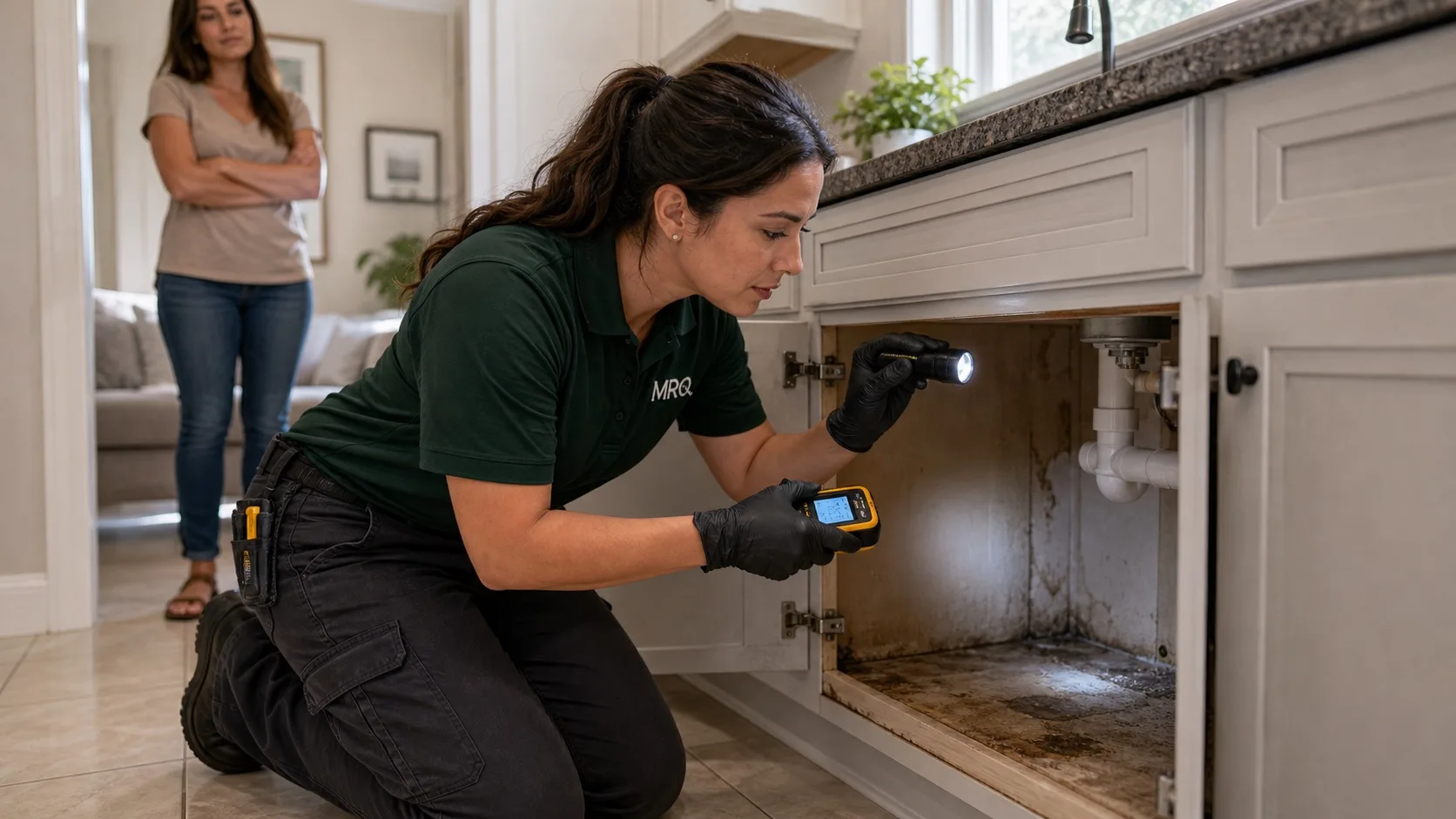
Bathrooms, kitchens, and laundry rooms create many of the calls for mold remediation in Orlando. Under sinks, look for warped cabinet floors, staining at supply lines, drain leaks, soft particleboard, odor, or discoloration near the wall. Around toilets and tubs, watch for loose caulk, stained baseboards, soft drywall, or flooring that moves. In laundry areas, inspect behind the washer, around supply valves, below the drain, and along baseboards. These spaces often hide moisture because cabinets and appliances block airflow. If the material is damaged, wet, or visibly affected, do not rely on a quick wipe-down. Professional inspection can help determine whether the concern is limited to a cabinet base, extends behind the wall, or requires a broader mold remediation scope.
When DIY cleaning stops making sense
Small surface marks on a nonporous surface may be manageable after the moisture source is corrected. DIY cleaning stops making sense when growth is on drywall, wood, insulation, carpet pad, cabinet material, or other porous surfaces, when the affected area keeps returning, when the source is hidden, or when disturbing the material could spread debris. It is also a poor fit when a property owner needs documentation, when a tenant or occupant has reported concerns, or when the area is near HVAC components. Professional mold remediation gives structure to the work: define the affected area, contain as needed, remove or clean the correct materials, document conditions, and prevent recurrence. That is different from spraying a product and hoping the stain does not come back.
Signs property managers should document
Property managers should document more than a close-up of the suspected mold. Include the unit or suite, room name, access notes, tenant report, leak history, repair history, date discovered, and whether the area is occupied. Take photos from the doorway, photos of the affected material, and photos of nearby plumbing, windows, AC equipment, or exterior walls. If there was a recent storm, note whether other units reported similar issues. This documentation helps the remediation company plan access and helps the owner understand why a small spot may or may not require a larger scope. For rental homes, apartments, offices, and retail spaces, the best mold response is organized. It should reduce uncertainty for occupants while keeping the work tied to actual conditions.
What to avoid before professional review
Do not paint over staining, cut out drywall without containment, sand visible growth, spray heavy chemicals into wall cavities, or place new flooring over material that may still be damp. These shortcuts can hide evidence, create odor, disturb affected material, or cause the same issue to return after repair. Also avoid assuming that all mold concerns are solved by one service. A roof leak may need roof repair. A plumbing leak may need a plumber. A humidity issue may need HVAC attention. Mold remediation should fit into that sequence, not replace it. The best next step is to stop the source, document the signs, limit disturbance, and request inspection or remediation planning based on the material and moisture history.
When to call Mold Remediation Orlando
Call when visible growth is present on porous material, musty odor persists, water damage was not dried or inspected, stains return after cleaning, cabinets or drywall are soft, flooring trapped water, or a rental or commercial property needs documentation. A clear first call should include the city, property type, affected room, source if known, how long the issue has been present, and photos. The contractor can then recommend inspection, remediation planning, water damage and mold cleanup, or another trade first. That practical routing is important for Orlando properties because moisture problems range from small bathroom humidity issues to hidden storm damage. The right response starts with the signs you can document and the source that needs to be corrected.
How to describe the problem on the first call
The first call is more useful when the description is specific. Instead of saying there may be mold somewhere in the house, explain the room, the visible sign, the smell, the material, the city, and the water history. A strong description might be: there is a musty odor in a Winter Park closet on an exterior wall, the baseboard is swollen, and the room felt humid after the last storm. Another might be: the cabinet under the kitchen sink in Kissimmee has dark spots and soft particleboard after a slow drain leak. These details help the contractor decide whether the situation sounds like inspection, remediation planning, or water damage and mold cleanup. They also reduce the chance of a generic quote that does not match the property.
Why source control matters more than the stain
A visible stain can attract all the attention, but the source controls whether the problem returns. If a plumbing leak continues, mold remediation will not solve the cause. If a bathroom has poor ventilation, the same ceiling spots may come back. If a patio door leaks during wind-driven rain, new baseboards can be damaged after the next storm. If the AC system leaves the home humid, surface cleaning may only last until conditions rise again. Professional remediation should work with source control, not around it. That may mean pausing cosmetic repairs, coordinating with a plumber or roofer, or recommending humidity correction before final finishes are installed. For Orlando homeowners, this is the difference between removing a symptom and solving the moisture pattern that created it.
A final homeowner checklist
Before deciding that a mold sign is minor, check four things: source, material, duration, and recurrence. Source asks where the moisture came from and whether it is fixed. Material asks whether the affected surface is porous, layered, or easy to clean. Duration asks how long the area may have been wet or humid. Recurrence asks whether the stain, odor, or growth has returned after cleaning. If two or more of those answers are concerning, professional inspection is usually the more sensible next step. It gives the property owner a documented path before repairs, paint, new trim, or new flooring hide the evidence.