Mold guide
Mold Problems After Storms and Humidity in Central Florida
Storm and humidity mold guide for Central Florida properties, connecting roof leaks, AC problems, wet materials, and prevention questions to inspection-first next steps.
Storms and humidity are part of life in Central Florida, but they can create serious moisture questions inside homes, rentals, condos, and commercial spaces. Mold problems after storms do not always start with standing water. They can begin with wind-driven rain around windows, roof leaks that wet attic insulation, patio door seepage, AC systems that cannot control humidity, or damp materials that never fully dry. Orlando property owners often notice the issue later when a room smells musty, paint bubbles, baseboards swell, or spots appear after a heavy weather week.
The most important post-storm decision is whether the affected materials dried quickly and completely. A wet exterior wall, cabinet back, ceiling cavity, closet, or floor edge can stay damp while the visible surface looks acceptable. If humidity stays high, the drying timeline stretches and the chance of mold concern rises. That is why storm-related mold inspection should focus on the leak path, moisture history, material type, and whether the source is corrected.
This guide explains where storm moisture hides in Orlando and Central Florida properties, what to check after heavy rain, how AC and humidity issues change the risk, and when to move from observation to professional mold remediation planning.
Why storm mold concerns are different in Central Florida
A storm-related mold concern is different from a simple spill because the water source may be broad, repeated, and hard to see. Wind can push rain around windows, under doors, into roof edges, and through small exterior openings. A roof leak may wet insulation before the ceiling stain appears. A power interruption can shut down air conditioning while the home is humid. A vacant property may sit closed for days after heavy rain. Central Florida conditions also make drying less forgiving because the outside air is often humid and warm. When moisture is trapped behind trim, cabinets, drywall, or flooring, the visible surface can dry while the hidden side stays damp. That is why storm checks should be based on materials and leak paths, not only on whether water is still visible.
Common places water hides after wind-driven rain
After strong rain, inspect window sills, patio doors, exterior wall corners, baseboards, closets against outside walls, ceiling edges, attic access areas, and flooring transitions. In many Orlando homes, water shows up at the floor line because it followed framing, trim, or slab edges before anyone noticed. In condos and townhomes, water may travel from a neighboring unit, roof assembly, balcony, or shared wall. Commercial spaces may have storefront entries, flat roof penetrations, or ceiling tiles that show delayed staining. A moisture concern can also hide behind furniture or storage pushed against exterior walls. Move items carefully, photograph what you find, and avoid disturbing visible growth. The inspection question is not only where water appeared, but where it traveled and which porous materials absorbed it.
Roof leaks and ceiling stains after storms
A ceiling stain after a storm should be treated as a moisture history clue, not just a paint problem. The visible stain may be the lowest point of a leak path that started at the roof, flashing, vent, skylight, or attic condensation issue. If insulation above the ceiling is wet, it can hold moisture and keep the drywall damp. If the leak repeats during multiple storms, each cycle resets the drying timeline. Before repainting, document the stain, check whether it grows after rain, and address the roof or exterior source. Mold remediation may be needed if the ceiling material, insulation, framing, or nearby wall areas show growth, odor, or persistent moisture. A professional inspection can help decide whether the concern is isolated, active, or ready for a remediation scope.
AC performance and indoor humidity after storms
Storm weeks often expose AC and humidity problems. If the air conditioner is short cycling, the drain is clogged, the system was off during a power interruption, or the home stayed closed while humid, indoor moisture can rise even without a major leak. Look for sweating vents, musty closets, damp-feeling rooms, condensation, and odors that are strongest when the house is closed. High humidity can make minor water intrusion worse because materials dry slowly. It can also create surface growth on contents, furniture, or walls in poorly ventilated areas. Mold remediation may be part of the solution, but the humidity source has to be corrected. Otherwise, cleaning the affected area may only provide a temporary improvement before the same conditions return.
Water damage from patio doors, windows, and exterior walls
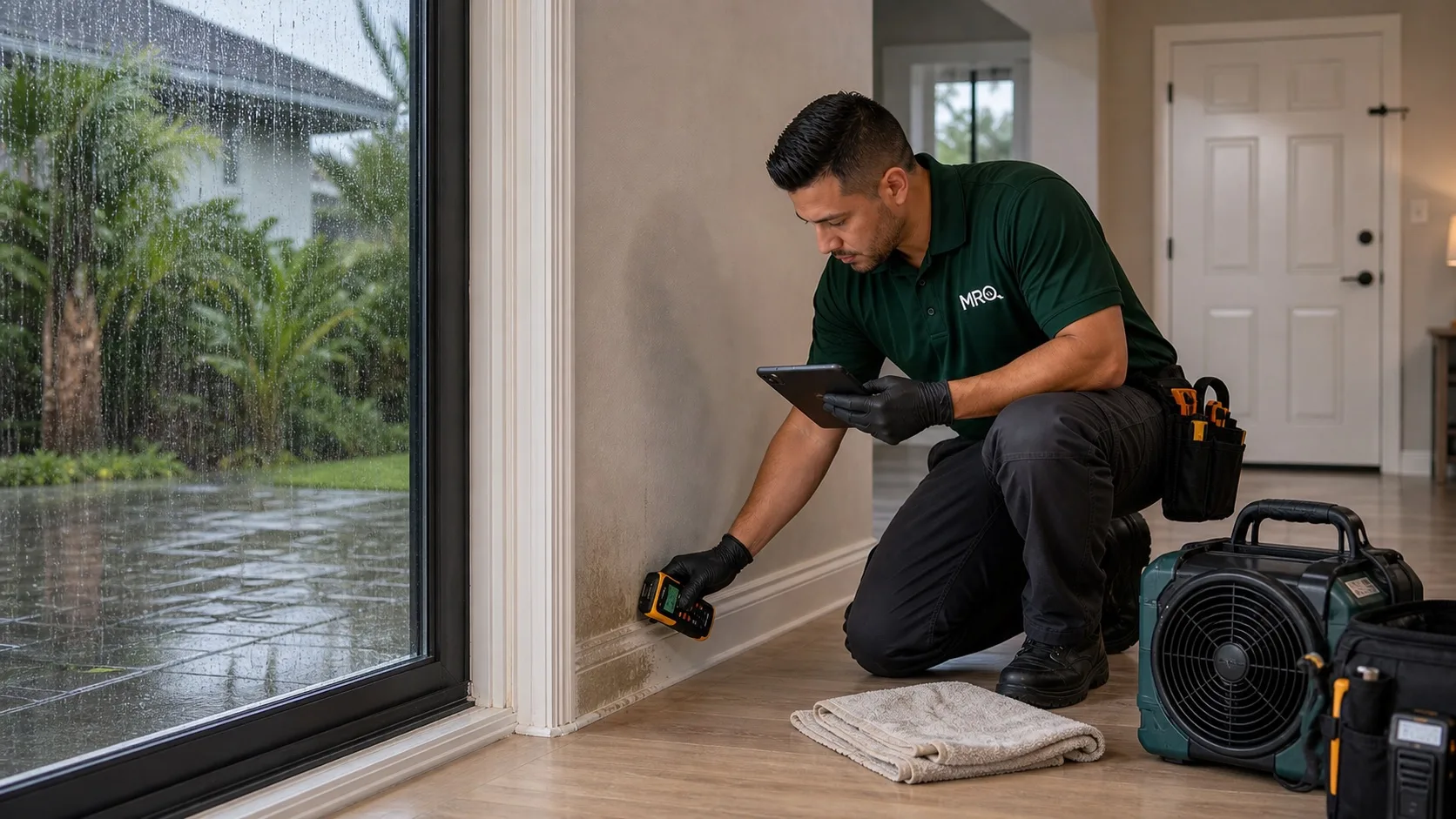
Patio doors and windows are common storm entry points in Orlando-area properties. Wind-driven rain may bypass weatherstripping, track through a door frame, enter around older windows, or collect at flooring edges. The damage can look minor at first: a wet towel near the door, a small baseboard stain, or slight flooring movement. The hidden issue is that water can travel under floating floors, behind trim, or into wall cavities. If the area smells musty after drying, if the baseboard swells, or if the flooring cups or buckles, inspection is a better next step than cosmetic repair. A remediation scope may involve removing affected trim or flooring sections, cleaning exposed surfaces, drying the area, and making sure the exterior entry point is corrected.
Flooding, storm runoff, and wet flooring
Storm runoff and indoor flooding require extra caution because water may carry soil, debris, or contaminants depending on where it came from. Even when the water looks clean, flooring assemblies can trap moisture underneath. Carpet pad, laminate backing, engineered flooring, and baseboards may stay wet after the surface has been extracted. If water covered a room, reached walls, or sat for an unknown period, mold inspection and water damage review should happen early. The contractor should consider the water source, duration, affected materials, and whether removal is needed before drying can be effective. Mold remediation becomes more likely when porous materials stayed wet, odor develops, or visible growth appears along the floor line or behind baseboards.
A post-storm checklist for Orlando homeowners
After heavy rain, walk the property with a simple checklist. Look at ceilings below rooflines, around window frames, near patio doors, under sinks, in closets, behind furniture on exterior walls, around AC closets, and along baseboards. Smell rooms that stay closed. Check whether the AC is maintaining normal comfort and whether any vents or windows show condensation. Photograph anything new, including stains, swelling, damp flooring, or visible spots. Write down the date of the storm, when the issue was noticed, and whether any repair has already been made. If you own a rental or manage a property, ask occupants when the condition started and whether it changes after rain. These details help the mold inspection process move from guesswork to a focused moisture story.
Special concerns for rentals, condos, and commercial spaces
Rental, condo, and commercial storm issues require more documentation because more people may be involved. A tenant may report odor without knowing the leak source. A condo owner may see damage from a roof, balcony, or neighboring unit. A business may need to keep operating while a ceiling or wall concern is evaluated. Document access, occupant reports, weather timing, affected rooms, and whether the source belongs to the property owner, association, tenant, or another party. Mold remediation planning may need containment boundaries, work timing, debris control, and communication with managers or occupants. The clearer the documentation, the easier it is to explain why inspection, cleanup, or material removal is recommended and what must happen before the space is repaired.
When observation is enough and when it is not
Observation may be enough when a small amount of water was caught immediately, the source is corrected, the material is nonporous, the area dries quickly, and no odor, staining, or material change appears. Observation is not enough when the source is unclear, the water reached porous materials, the room stays humid, odor persists, stains grow, flooring moves, or visible growth appears. It is also not enough when a property owner needs documentation before repairs. Orlando storm conditions can make delays costly because another rain event may arrive before the first area has dried. If you are unsure, inspection is the lower-commitment step that can clarify whether the area needs monitoring, drying, repair, or professional mold remediation.
How professional remediation should address storm-related mold
Storm-related mold remediation should start with source awareness. If the roof, window, door, exterior wall, or AC humidity issue is still active, cleanup has to be coordinated with repair. The remediation scope may include containment, HEPA filtration, removal of affected porous material, cleaning exposed surfaces, disposal, and documentation. For a ceiling leak, that may mean addressing stained drywall and wet insulation. For a patio door leak, it may mean baseboard or flooring removal in the affected area. For a commercial space, it may mean scheduling around business hours. The plan should be specific to the material and moisture path. The best outcome is not just a cleaner-looking surface. It is a property that has the source corrected, the affected material handled, and a prevention plan for the next storm cycle.
Prevention before the next storm cycle
Prevention is practical maintenance. Keep roof and gutter issues on the repair list, inspect window and door seals, watch AC drain lines, monitor indoor humidity, avoid storing boxes against exterior walls, and check known leak areas after storms. In vacant properties, set AC and humidity controls responsibly and have someone inspect after heavy rain. In rentals, encourage fast reporting of water, odor, staining, or AC problems. For commercial properties, add roof edges, storefront entries, and ceiling tile checks to the maintenance routine. These steps do not eliminate every mold risk, but they shorten the time between moisture and action. In Central Florida, that speed matters. The sooner a wet material is found and dried or remediated properly, the less likely it is to turn into a larger mold problem.
How to separate storm damage from normal humidity
Storm damage usually has a path: a ceiling stain below a roof area, a wet baseboard near a patio door, water marks around a window, damp flooring near an exterior wall, or a known event that happened after heavy rain. Normal humidity problems are often more diffuse: musty closets, sweating vents, surface spots in poorly ventilated rooms, or contents that feel damp even without a leak. The two can also overlap. A small storm leak may be made worse by high indoor humidity, and a humid room may reveal an exterior wall problem that had been hidden. The practical approach is to document when the sign appears, whether it changes after rain, which material is affected, and whether moisture is localized or widespread. That information helps an inspector decide whether the response should focus on leak repair, humidity correction, mold remediation, or all three.
What to send when requesting post-storm help
When requesting help after a storm, send photos that show context, not only close-ups. Include the room from the doorway, the exact stain or affected material, nearby windows or doors, the floor line, ceiling area, and any exterior condition that may be related. Write a short timeline with the storm date, when the sign was noticed, whether water was actively entering, what drying was attempted, and whether the smell or stain has changed. Include the property city and whether the property is a home, condo, rental, office, retail space, or managed building. If an association, landlord, tenant, roofer, plumber, or maintenance team is involved, note that too. Good information helps the mold remediation company plan the right visit, bring the right equipment, and avoid guessing about a storm path that may cross multiple building components.
A final post-storm rule of thumb
If a material got wet during a storm and still smells, stains, swells, or feels damp after normal drying efforts, treat it as more than a cosmetic issue. If the source is repaired and the material is dry, observation may be enough. If the source is unknown or the material is porous, inspection is the safer first step. If visible growth is present or the area has a known water history, remediation planning may be needed. This rule of thumb keeps the response measured. It avoids panic, but it also avoids the common Orlando mistake of repainting a storm stain while the cavity or insulation above it remains damp.