Mold guide
Mold Inspection vs Mold Remediation: What Orlando Homeowners Should Know
A comparison guide for mold inspection versus remediation in Orlando, including inspection cost questions, testing, and when cleanup should begin.
Mold inspection and mold remediation are related, but they are not the same service. Inspection is the investigation step. Remediation is the corrective cleanup step. For Orlando homeowners, that difference matters because humidity, storm leaks, AC condensation, plumbing failures, and hidden moisture can create situations where the visible spot is only part of the story. Starting with the wrong service can lead to vague pricing, unnecessary work, or cleanup that misses the source.
A mold inspection should help answer practical questions: where is the moisture coming from, which materials may be affected, how far does the concern appear to extend, is testing useful, and what should happen next. Mold remediation should address the affected area with a planned scope that may include containment, removal of damaged porous material, cleaning, filtration, and documentation. The work should follow the evidence found during inspection or the clear facts already visible at the property.
This guide explains how to decide whether to request mold inspection or mold remediation first, what an Orlando property owner should prepare, which warning signs matter, and how to compare scopes without getting lost in confusing language.
The simple difference between inspection and remediation
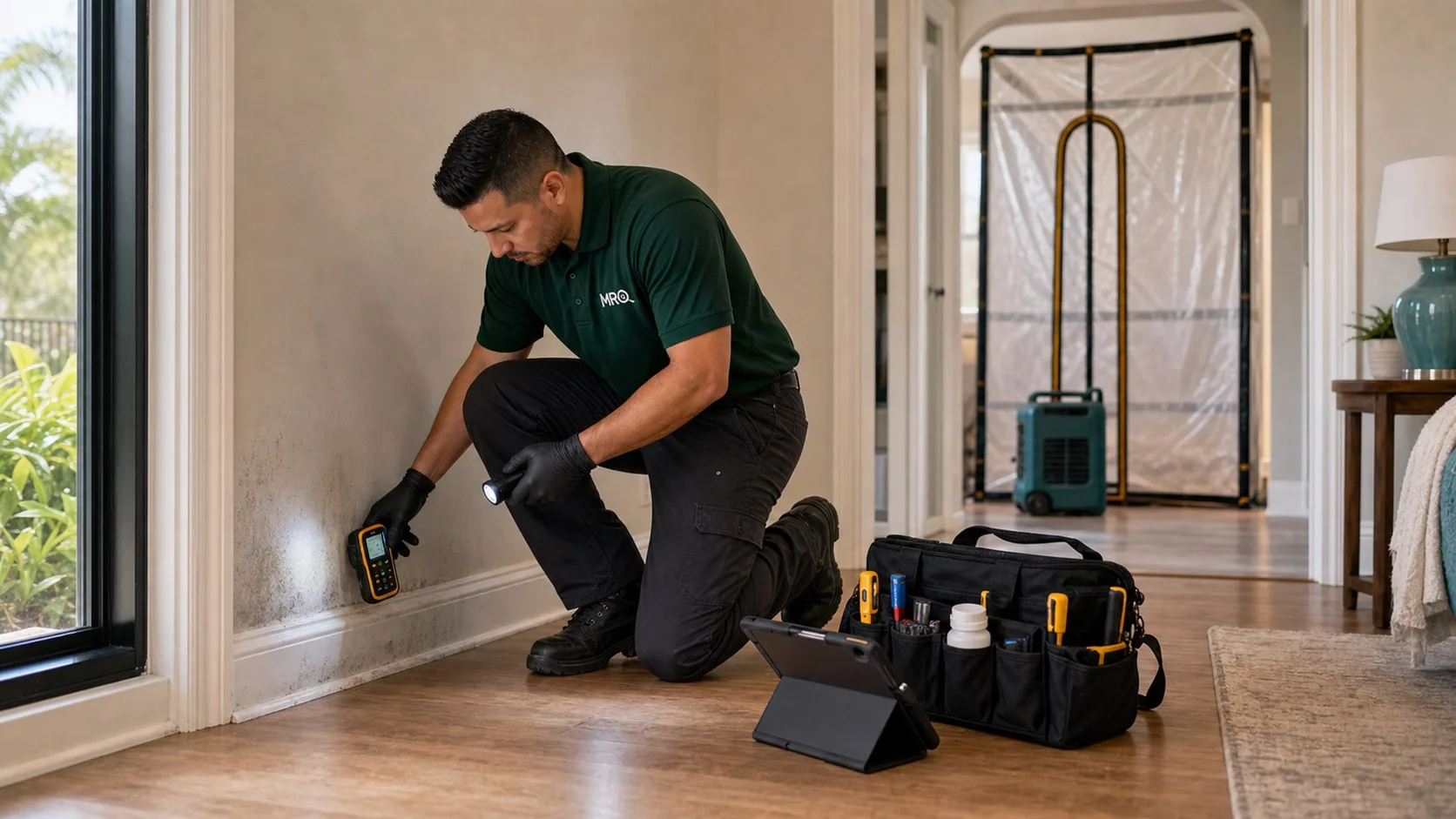
Inspection identifies the problem. Remediation corrects the affected area. A mold inspection may include visual review, moisture checks, odor notes, leak history, photos, and recommendations for testing or cleanup. It is useful when you do not know whether a stain, smell, or past leak has created a larger issue. Mold remediation is the active work that follows when the affected area is defined well enough to plan containment, cleaning, material removal, or prevention steps. If a homeowner sees a small stain and wants to know whether it is old, active, or connected to hidden moisture, inspection usually comes first. If there is visible growth from a known leak and affected materials are obvious, remediation planning can begin sooner. The key is that cleanup decisions should be tied to evidence, not pressure.
What an Orlando mold inspection should look for
A useful inspection is not just a glance at a wall. It should consider room humidity, leak history, roof or plumbing events, AC performance, exterior wall exposure, visible staining, cabinet or baseboard swelling, flooring changes, and odor reports. In Orlando, the inspector should also think about local moisture patterns: summer humidity, storm-driven rain, slab homes, vacation homes that sit closed, rental units with uneven AC use, and condos where water may come from another unit. The goal is to find the moisture story. Was there a one-time water event? Is there an active leak? Did the material dry? Is there evidence of growth? Are nearby rooms or cavities involved? Those answers guide whether the property needs monitoring, repair, testing, remediation, or a different trade.
When mold testing is useful and when it is not
Mold testing can be useful in specific situations, but it is not a replacement for moisture investigation. Testing may help when there is odor without visible growth, occupant concern, a need for documentation, a real estate question, or uncertainty about whether a hidden condition exists. Testing is less helpful when obvious water damage and visible growth already show that the affected material needs attention. In that case, the priority may be defining the scope and correcting the source. Property owners sometimes ask for testing first because they want certainty. That is understandable, but a test result without leak history, moisture readings, or material assessment can still leave the main question unanswered. A practical Orlando inspection explains whether testing adds value or whether the next step should be focused remediation planning.
What mold remediation usually includes
Mold remediation is the controlled cleanup of affected areas. Depending on the scope, it may include setting up containment, using filtration, removing unsalvageable porous materials, cleaning surfaces, bagging debris, documenting conditions, and advising on prevention. A remediation contractor may also coordinate around plumbing repair, roof repair, cabinet removal, flooring work, or reconstruction. The exact scope should match the material and the source. Drywall with growth from a recurring leak may need a different plan than surface growth on a nonporous item. A commercial office may need after-hours scheduling and occupant communication. A rental unit may need photo documentation for the owner and property manager. Remediation is not just cleaning what is visible; it is correcting the affected area in a way that makes sense for the property.
Which service should you request first?
Request inspection first when the source is unclear, the visible signs are small but suspicious, the odor comes and goes, a past leak may have dried poorly, or you need documentation before deciding on cleanup. Request remediation planning when there is visible growth, confirmed wet materials, repeated staining, or a known water event that affected porous materials. If you are unsure, call and describe the room, city, leak history, material, smell, and whether the area is occupied. A good first call should route the request without turning every situation into the same service. For example, a Lake Nona homeowner with a musty closet after weeks of humidity may need inspection first, while an Orlando property manager with cabinet growth after a supply line leak may be ready for a remediation scope.
How cost conversations should be framed
Mold inspection cost and mold remediation cost are often searched together, but they are priced differently because they answer different questions. Inspection depends on property size, access, number of suspect areas, testing needs, and documentation requirements. Remediation depends on containment size, affected materials, removal needs, equipment, labor, disposal, and the complexity of working around occupants. A price that sounds simple over the phone may not stay accurate if the contractor has not seen the material or the source. The more useful conversation is scope clarity: what area is included, what is excluded, what assumptions are being made, what has to be repaired before cleanup, and what documentation will be provided. That protects the homeowner from comparing a detailed remediation plan against a vague cleaning estimate.
Common Orlando situations that start with inspection
Inspection is often the better first step for musty bedrooms, closets on exterior walls, ceiling stains with unknown roof history, AC condensation questions, suspected mold in a rental, or discoloration that keeps returning after cleaning. These situations may or may not require full remediation, but they do need a moisture explanation. Orlando homes can have rooms that feel cool but still hold elevated humidity. Short-term rentals can sit closed between guests. Condos and townhomes can have water events from neighboring units. Older homes may have previous repairs that hide the original leak. In each case, inspection helps separate cosmetic staining from active moisture, past damage from current damage, and a small localized cleanup from a larger affected area.
Common situations that move directly toward remediation planning
Remediation planning becomes more likely when there is visible growth on porous building materials, damp drywall, swollen baseboards, wet cabinets, roof leak damage, flood history, flooring that trapped water underneath, or repeated odor after drying attempts. The same is true when a property manager needs a unit turned safely after a known leak or a business owner needs a commercial space evaluated for cleanup timing. In these cases, inspection still matters, but the conversation can move quickly into affected area, containment, removal, cleaning, and access. The contractor should still verify the source and material conditions. Skipping that step can leave the property owner with a cleaned surface while the cause of the mold remains behind the wall, cabinet, or flooring.
What to prepare before the appointment
Prepare a short timeline and a clear set of photos. Write down when the issue was first noticed, any known leak or storm event, whether the source has been repaired, what rooms are affected, what smells different, and what cleaning or drying has already been attempted. Send photos that show the whole room, the close-up condition, the baseboard or ceiling line, and any nearby plumbing, appliance, window, or AC component. If you are calling for a rental or commercial property, include access notes, occupant concerns, and timing constraints. This information helps the inspector or remediation estimator arrive with the right context. It also keeps the scope focused on the real issue instead of starting from a generic mold checklist.
How to compare inspection and remediation recommendations
Compare recommendations by specificity. A strong inspection summary should identify suspected source, affected rooms or materials, evidence found, whether testing is recommended, and next steps. A strong remediation scope should explain containment, removal or cleaning areas, material assumptions, disposal, documentation, and what repairs are outside the mold contractor's work. Be cautious with advice that ignores source control, skips material details, or promises one product can solve every mold problem. Orlando mold remediation should be practical and property-specific. The best outcome is a clean decision path: inspect when the concern is uncertain, remediate when the affected area is clear, and always correct the moisture condition that allowed the issue to appear.
Bottom line for homeowners
If you are looking at a stain, odor, or past leak and you do not know what is happening, start with mold inspection. If you already know water affected porous materials and visible growth is present, ask for remediation planning. If the situation is somewhere in between, a first call should help you decide without pressure. The right service protects the property, the budget, and the timeline. It also gives Google and human readers the same clear signal: this page is not about general cleaning, home fragrance, or vague restoration language. It is about Orlando mold inspection and mold remediation decisions after real moisture problems.
Questions to ask before approving remediation work
Before approving a mold remediation scope, ask what moisture source is suspected, whether that source has been corrected, which materials are included, which nearby materials are excluded, whether containment is recommended, how debris will be handled, what photos or notes will be provided, and what trade work may be needed after cleanup. Ask whether the scope is based on visible evidence, moisture readings, testing, or a combination of information. If the contractor recommends removing material, the scope should explain why that material cannot simply be wiped or painted. If the contractor recommends cleaning without removal, the scope should explain why the material is suitable for that approach. These questions do not slow the job down. They help the homeowner understand the difference between an inspection finding, a remediation recommendation, and a reconstruction task.
How this decision changes for property managers
Property managers often need faster routing because a tenant, owner, association, or business operator is waiting for a clear plan. Inspection may be needed first when the tenant reports odor, vague symptoms, or an unknown stain. Remediation planning may be needed first when a maintenance team has already confirmed a leak, wet drywall, visible growth, or cabinet damage. The manager should collect access details, unit number, room, occupant notes, lease timing, repair history, and photos before calling. In multifamily and commercial properties, the recommendation should also consider work hours, containment boundaries, communication, and whether other units or spaces may be connected to the moisture source. A strong Orlando mold company can help translate the technical finding into a practical next step that an owner or tenant can understand.
The practical decision path
A simple decision path keeps the project organized. If you have odor, stains, or uncertainty, choose inspection. If you have confirmed wet porous material or visible growth from a known water source, ask for remediation planning. If you have both uncertainty and obvious damage, start with a visit that can document conditions and build the scope at the same time. The property owner should leave that conversation knowing the source status, the affected material, the recommended next step, and what should not be repaired yet. That level of clarity is especially important in Orlando because cosmetic repair can hide moisture while humidity keeps the condition active behind the surface.