Mold guide
How Fast Mold Can Grow After Water Damage in Orlando
Answer-first guide for how fast mold can grow after water damage, why Orlando humidity slows drying, and when inspection or remediation becomes the safer next step.
Mold can start becoming a concern quickly after water damage when drywall, trim, cabinets, flooring, insulation, or personal contents stay damp. In Orlando, the timeline can feel even tighter because warm weather, storm cycles, slab moisture, high indoor humidity, and air conditioning problems often slow the drying process. The practical answer is not to wait until visible growth is obvious. If materials were wet, the first job is source control, drying, documentation, and a clear decision about whether a mold inspection or remediation scope is needed.
A small, clean water event that is stopped early and dried thoroughly may not turn into a remediation job. A leak that sat overnight behind baseboards, a roof drip that reached insulation, a supply line that soaked cabinets, or a storm event that left rooms humid for days is different. Mold remediation companies look at the material, moisture history, surface condition, room humidity, odor, and whether the source is fixed before recommending next steps.
This Orlando guide is written for homeowners, landlords, property managers, and business owners who need to make a calm decision after water damage. Use it to understand the first 24 to 72 hours, the local humidity factors that matter, what to photograph, what not to disturb, and when to call for professional mold inspection or mold remediation in Orlando.
Quick answer: the first 24 to 72 hours matter
After water damage, the first day is about stopping the source and getting wet materials drying. The next day is about checking whether the drying effort is actually working. By the third day, damp porous materials, musty odor, staining, or swelling should be taken seriously because the problem may be moving from simple water cleanup into mold evaluation. That does not mean every wet spot automatically needs demolition. It does mean the condition of the material matters. Drywall paper, MDF baseboards, particleboard cabinets, carpet pad, insulation, and cardboard storage absorb moisture and can hold it where fans do not reach. In Orlando homes, a room may feel dry while the back of trim, the toe kick under a vanity, the cabinet wall behind a dishwasher, or the wall cavity near a roof leak remains damp. A moisture reading and inspection can separate normal drying from a hidden mold risk.
Why Orlando humidity can slow drying
Orlando properties deal with humidity almost year round, and that changes the water damage timeline. Air conditioning may cool a room without removing enough moisture, especially after a leak, storm, power interruption, oversized AC cycle, or closed-off room. Summer storms can push humidity up while exterior walls, window frames, patio doors, and attic spaces are already wet from rain. In slab homes, flooring transitions and baseboards may hold moisture longer than expected. In townhomes, condos, and apartments, water may travel from an upstairs unit or shared wall before anyone sees the source. When indoor relative humidity stays high, evaporation slows, odors become more noticeable, and materials can remain damp after the visible water is gone. That is why a mold remediation decision should not be based only on whether the floor looks dry from the doorway.
Materials that usually need closer attention
Some materials dry better than others. Tile, sealed stone, concrete, and metal are easier to evaluate because they do not feed mold the same way paper-faced drywall, wood trim, cabinet boxes, carpet pad, insulation, and laminate backing can. The risk rises when water reaches layered materials. A bathroom vanity may look acceptable from the front while the cabinet base, wall behind it, and toe kick stay damp. A laundry leak may run under vinyl plank flooring and remain trapped along the edges. A roof leak may stain a ceiling, but the insulation above it may hold moisture longer. Orlando mold remediation work often starts with these layered assemblies because they hide the real condition. If a material is swollen, soft, delaminating, crumbly, or smells musty after drying attempts, it deserves a professional review before anyone paints over it or closes it back up.
What to do on day one after a leak
Start with safety and source control. Stop the water if you can do it safely, call the appropriate trade if the leak is active, and keep people away from electrical hazards or sagging materials. Move dry belongings away from wet walls, cabinets, and flooring so the affected area can breathe. Take wide photos of the room, close photos of stains or damaged materials, and photos of the water source if it is visible. Do not stack boxes, rugs, furniture, or plastic bins against wet surfaces because that traps moisture. If the water was clean and the area is small, begin drying with airflow and dehumidification when available. If the leak source is unclear, the water sat for a while, the affected material is porous, or a musty odor is present, request mold inspection before opening wall cavities or scraping visible growth.
How to tell whether drying is working
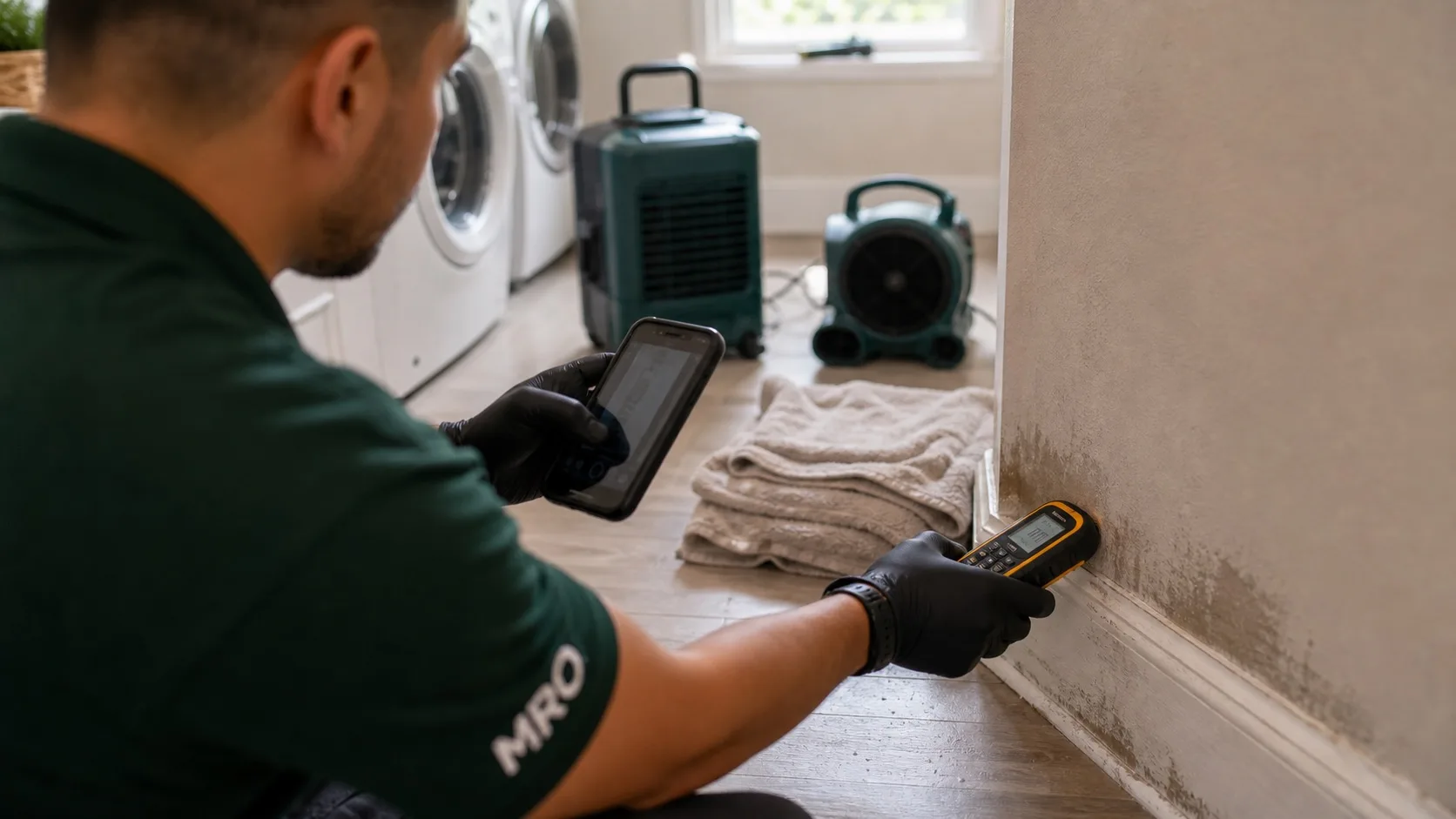
A room can look better before it is actually dry. Useful signs include normal smell, no new staining, no swelling, no cool damp feel along baseboards, no buckling flooring, and no condensation or dampness in nearby closets. Less useful signs include a surface that feels dry for a few minutes or a fan that has been running without any moisture measurement. If the AC is struggling, windows are fogging, the room feels humid, or the odor returns when the house is closed up, drying may not be complete. Professional mold inspection can include a moisture check of suspect materials, a review of humidity conditions, and a discussion of whether material removal, drying support, or remediation planning is appropriate. The goal is to avoid both underreacting to hidden moisture and overreacting to a small event that was actually corrected.
When water damage becomes a mold remediation question
Water damage becomes a mold remediation question when moisture remains in materials, visible growth appears, odor persists, staining spreads, or the source was hidden long enough that the affected area cannot be trusted from the surface. A one-time spill on tile is not the same as a refrigerator line that leaked behind cabinets for a week. A ceiling stain from a roof leak is not the same as saturated attic insulation and damp drywall paper. Remediation planning may include containment, HEPA filtration, selective removal of affected materials, cleaning, disposal, and documentation. The scope depends on what is affected, not on fear-based language. For Orlando homeowners, the right question is, which materials got wet, how long did they stay wet, is the source corrected, and what evidence shows the area is dry now?
What photos and notes to send before inspection
Good photos make the first conversation much more productive. Send a wide room photo, a close photo of the leak area, a photo of the floor or baseboard line, and any image that shows swelling, staining, bubbling paint, cabinet damage, or visible growth. Add a short timeline: when the water was found, when it may have started, whether the source is stopped, what rooms were affected, and whether anyone tried drying. Include the property city, type of property, and whether the space is occupied. If you manage a rental, note tenant access, lease timing, and any urgent move-in or move-out dates. A mold remediation contractor can use that information to decide whether the next step should be inspection, a water damage and mold cleanup visit, a remediation quote, or a referral to another trade first.
What not to do before a mold review
Avoid sanding, scraping, spraying strong chemicals, painting over stains, cutting drywall, pulling baseboards, or running high airflow directly across visible growth before the area is reviewed. Those actions can disturb particles, hide evidence, or make the scope harder to understand. Also avoid closing wet areas behind new flooring, trim, cabinets, or wall repairs. If the leak source is still active, remediation should not be treated as a substitute for plumbing, roof, window, appliance, or AC repair. Source control comes first. A good Orlando mold remediation plan should explain the affected area, the suspected moisture source, the materials involved, and the practical sequence. That sequence protects the property owner from spending money on cosmetic work while the same moisture condition continues behind the surface.
How a remediation scope is usually built
A remediation scope should be based on the room, materials, access, moisture history, visible condition, odor, and whether the problem is isolated or connected to adjacent areas. The contractor may discuss containment boundaries, work area setup, removal of unsalvageable materials, cleaning methods, air filtration, disposal, and what needs to happen after remediation. In some cases, testing or third-party clearance may be part of the plan. In other cases, a smaller inspection and targeted cleanup may be enough. For commercial spaces, multifamily units, and rentals, the scope may also need work timing, occupant communication, and documentation photos. The best mold remediation plan is specific enough to explain what is being done, why it is being done, and what conditions must change so the problem does not return.
Prevention after the area is corrected
After water damage is handled, prevention is mostly moisture management. Keep the AC maintained, make sure bathrooms and laundry rooms ventilate properly, monitor recurring leak areas, keep storage off exterior walls when possible, and check under sinks, around appliances, near patio doors, and below roof leak history after heavy rain. In Orlando, homeowners should also pay attention to rooms that stay closed, closets that share exterior walls, and short-term rental properties that sit vacant with poor AC settings. If odor returns after repairs, do not ignore it because the visible surface may not show the issue yet. The point of early inspection is not to create a larger job. It is to catch the difference between a drying concern, a maintenance issue, and a true mold remediation need before the affected area expands.
Local examples that change the response
The same amount of water can lead to different decisions depending on the Orlando property and the material it reached. A dishwasher leak on tile that was found immediately may need drying and monitoring. A dishwasher leak that ran under cabinet bases while the family was away can become a cabinet and wall cavity concern. A roof stain in a dry attic may call for roof repair and observation, while a roof stain with damp insulation and musty odor may need inspection and removal planning. A short-term rental near the attractions may sit closed between guests, so humidity and delayed reporting become part of the timeline. A Lake Nona or Winter Garden home with newer flooring can still trap water at the edges if the leak reached under planks. These examples show why the best first question is not only how fast mold can grow. The better question is what material stayed wet, for how long, and under what indoor humidity conditions.
When to call instead of waiting another day
Call for mold inspection or water damage and mold cleanup when the source is unclear, the area smells musty, porous materials were wet, staining is spreading, baseboards or drywall feel soft, cabinets are swollen, flooring is moving, or the affected area is in a rental or commercial space that needs documentation. Also call when you are about to repair the surface but have not confirmed that the material is dry. Waiting another day can be reasonable after a very small, controlled event on nonporous material, but it is usually not a good plan when the leak was hidden or the room is humid. A clear call should include the city, room, water source if known, time discovered, photos, and whether the property is occupied. That gives the remediation team enough context to recommend inspection, focused cleanup, or a broader scope without turning every water event into the same answer.